


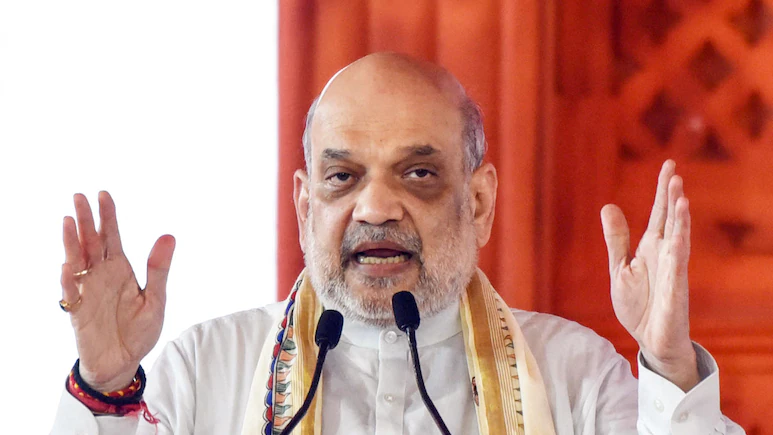
📰 PM Modi Includes Himself in Law to Sack Jailed Ministers: Amit Shah Counters Opposition’s ‘Black Bill’ Claims
New Delhi, August 25, 2025 — In a sharp response to the Opposition’s criticism of the Constitution (130th Amendment) Bill, 2025, Union Home Minister Amit Shah on Monday said that Prime Minister Narendra Modi has included himself in the purview of the proposed law aimed at removing ministers who are jailed for serious offences.
“The Prime Minister himself has included the post of PM in this,” Mr Shah told ANI, drawing a contrast with former Prime Minister Indira Gandhi, who brought the 39th Amendment in 1975 shielding top constitutional authorities from judicial review.
“PM Modi has brought a constitutional amendment against himself—if the Prime Minister goes to jail, he will have to resign,” Shah stated.
📜 What the Bill Proposes
The Constitution (130th Amendment) Bill, 2025, introduced alongside two others—the Government of Union Territories (Amendment) Bill and the Jammu and Kashmir Reorganisation (Amendment) Bill—proposes a landmark shift in ministerial accountability.
According to the bill, if the Prime Minister, a Union Minister, or a Chief Minister is arrested and held in custody for 30 consecutive days in connection with an offence punishable with at least five years of imprisonment, they will automatically lose their position on the 31st day, regardless of whether they are convicted.
🏛️ Opposition Uproar
Opposition parties have slammed the move, calling it a “black bill” and accusing the BJP-led Centre of using it as a political weapon to destabilize non-BJP state governments.
Leaders across party lines have raised concerns that the law could be misused, especially by central investigative agencies like the ED or CBI, to target political opponents and disqualify them without conviction.
⚖️ Shah’s Counter: ‘Can a Nation Be Run From Jail?’
Rejecting the allegations, Shah lashed out at the protests, questioning whether it is acceptable in a democracy for elected leaders to govern from prison.
“Can a Chief Minister, Prime Minister, or any leader run the country from jail? Even today, they are trying to ensure that if they go to jail, they can still run the government from inside. Will jails become CM Houses or PM Offices?” Shah said.
“We reject the idea that India cannot be governed without one particular individual.”
He also emphasized that the law doesn’t disturb majority mandates. “If one leader is jailed, the party can continue governing. Once the individual is out on bail, they can take oath again. What’s the problem with that?” he asked.
🔊 Parliament Row & Joint Committee Route
Referring to the opposition’s sloganeering and disruption in Parliament during the tabling of the bill, Shah defended the government’s legislative right:
“When an elected government brings a constitutional amendment, protest is fine, but blocking even its introduction is undemocratic. The bill will go to a Joint Parliamentary Committee, where every viewpoint will be heard. And since it’s a constitutional amendment, it requires a two-thirds majority. Debate is part of democracy—noise is not.”
🔍 Background & Political Context
The Centre’s move comes amid increasing scrutiny of jailed leaders like Delhi CM Arvind Kejriwal, whose arrest earlier this year triggered a political and legal storm. Many in the Opposition see the bill as targeted legislation to prevent leaders from continuing political influence while under custody.
📌 What’s Next?
The bill has been referred to a Joint Parliamentary Committee (JPC) for further review and is expected to be debated in upcoming sessions. As a constitutional amendment, it will require a two-thirds majority in both Houses of Parliament for passage.
- Nepal Flood Disaster: Death Toll Rises to 353 as Newly Formed Lake Threatens to Burst
- Kriti Sanon Raksha Bandhan Ad Controversy: GIVA Withdraws Advertisement After Social Media Backlash
- Maharashtra Marathi Language Drive: 1.5 Lakh Drivers Learn Marathi, 7,750 Fail Test and Must Reappear | Auto, Taxi and App-Based Cab Drivers Asked to Learn Marathi in Maharashtra
- No Lockdown in India Amid LPG Concerns: Hardeep Singh Puri Dismisses Rumours, Assures Energy Security
- Courts Rein in Arbitrary Bank Account Freezes: Major Relief for Citizens and Businesses