


Two Powerful Aftershocks Hit Eastern Afghanistan Amid Rising Death Toll from Devastating Earthquakes
September 5, 2025 – Two strong aftershocks shook eastern Afghanistan within a span of 12 hours, deepening fears of further destruction and casualties in a region already reeling from a series of deadly earthquakes this week. According to the German Research Center for Geosciences (GFZ), a magnitude 5.4 earthquake struck the southeastern region early Friday at a shallow depth of 10 km (6.2 miles) — just hours after another tremor hit late Thursday night.
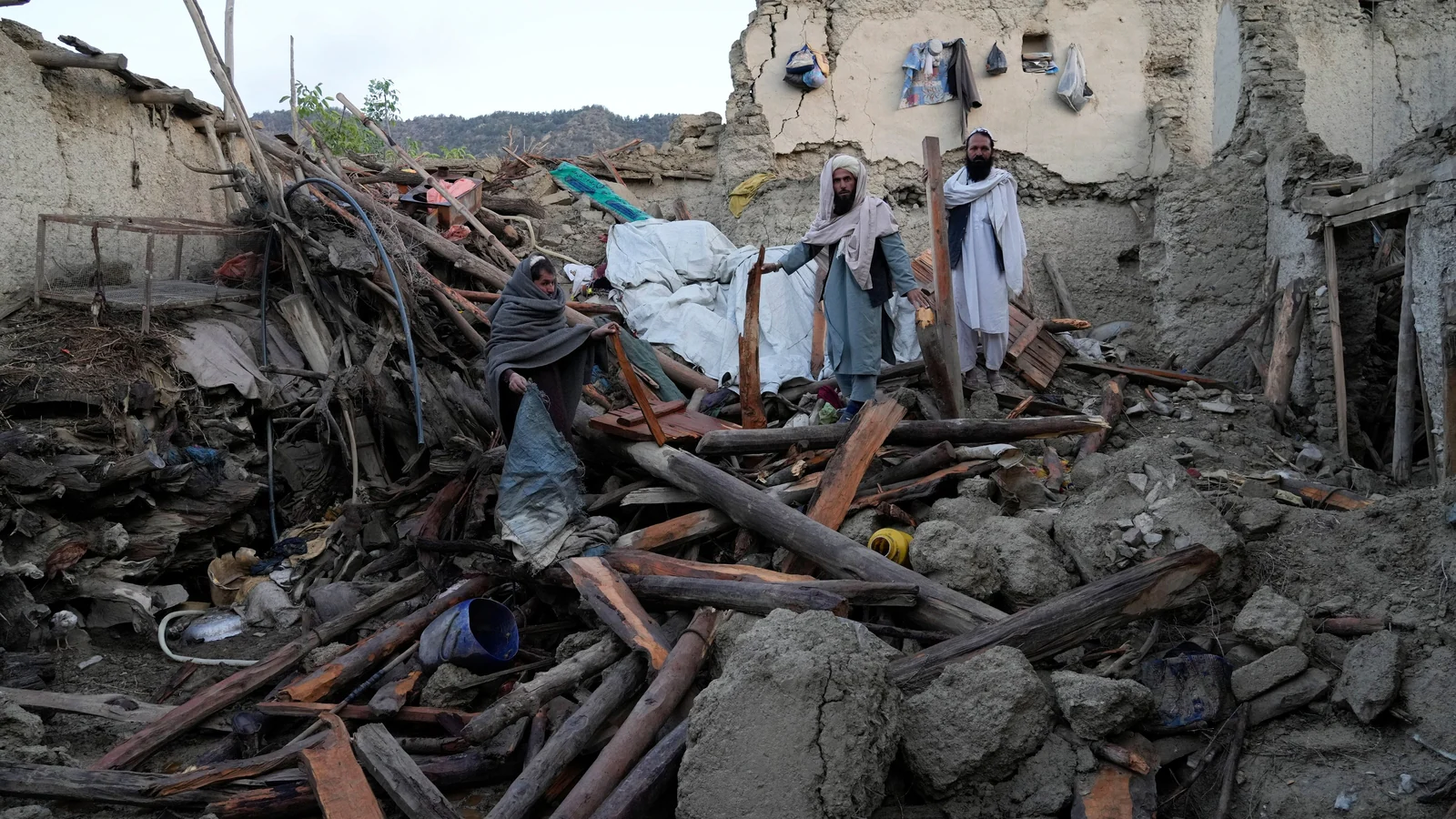
These aftershocks follow two major earthquakes earlier in the week that devastated parts of eastern Afghanistan. The Taliban administration confirmed that at least 2,205 people have died and 3,640 others were injured as of Thursday, September 4.
A Reuters journalist on the ground reported continuous tremors across Nangarhar province, while authorities continued to assess the full extent of damage.

The first major earthquake — magnitude 6.0 — struck just before midnight on Sunday, August 31, making it one of the deadliest in recent Afghan history. The tremor, also at a shallow depth of 10 km, caused widespread destruction in the provinces of Nangarhar and Kunar.
A second earthquake, measuring 5.5, hit on Tuesday, September 2, triggering landslides, blocking remote roads, and disrupting ongoing rescue operations. With most homes constructed from stone, mud, and timber, many families chose to sleep outdoors, fearing further aftershocks.
On Thursday, a magnitude 5.4 quake shook the Shiwa district of Nangarhar, near the Pakistan border, according to Naqibullah Rahimi, a spokesperson for the provincial health department. Initial reports indicated more structural damage in the already devastated area.
More than 6,700 homes have been destroyed so far, flattening entire villages and displacing thousands. Rescue teams continued pulling bodies from the rubble on Thursday, while survivors were left without access to clean water, food, or medical care.
The United Nations and other aid organizations have issued urgent appeals for humanitarian assistance, citing critical shortages of shelter, medical supplies, and food in the quake-hit zones.
Afghanistan, a nation already burdened by war, economic collapse, and reduced foreign aid under the Taliban regime, is particularly vulnerable to seismic disasters. The quakes are centered around the Hindu Kush mountain range, where the Indian and Eurasian tectonic plates intersect — a region known for frequent and often deadly seismic activity.
- Nepal Flood Disaster: Death Toll Rises to 353 as Newly Formed Lake Threatens to Burst
- Kriti Sanon Raksha Bandhan Ad Controversy: GIVA Withdraws Advertisement After Social Media Backlash
- Maharashtra Marathi Language Drive: 1.5 Lakh Drivers Learn Marathi, 7,750 Fail Test and Must Reappear | Auto, Taxi and App-Based Cab Drivers Asked to Learn Marathi in Maharashtra
- No Lockdown in India Amid LPG Concerns: Hardeep Singh Puri Dismisses Rumours, Assures Energy Security
- Courts Rein in Arbitrary Bank Account Freezes: Major Relief for Citizens and Businesses