


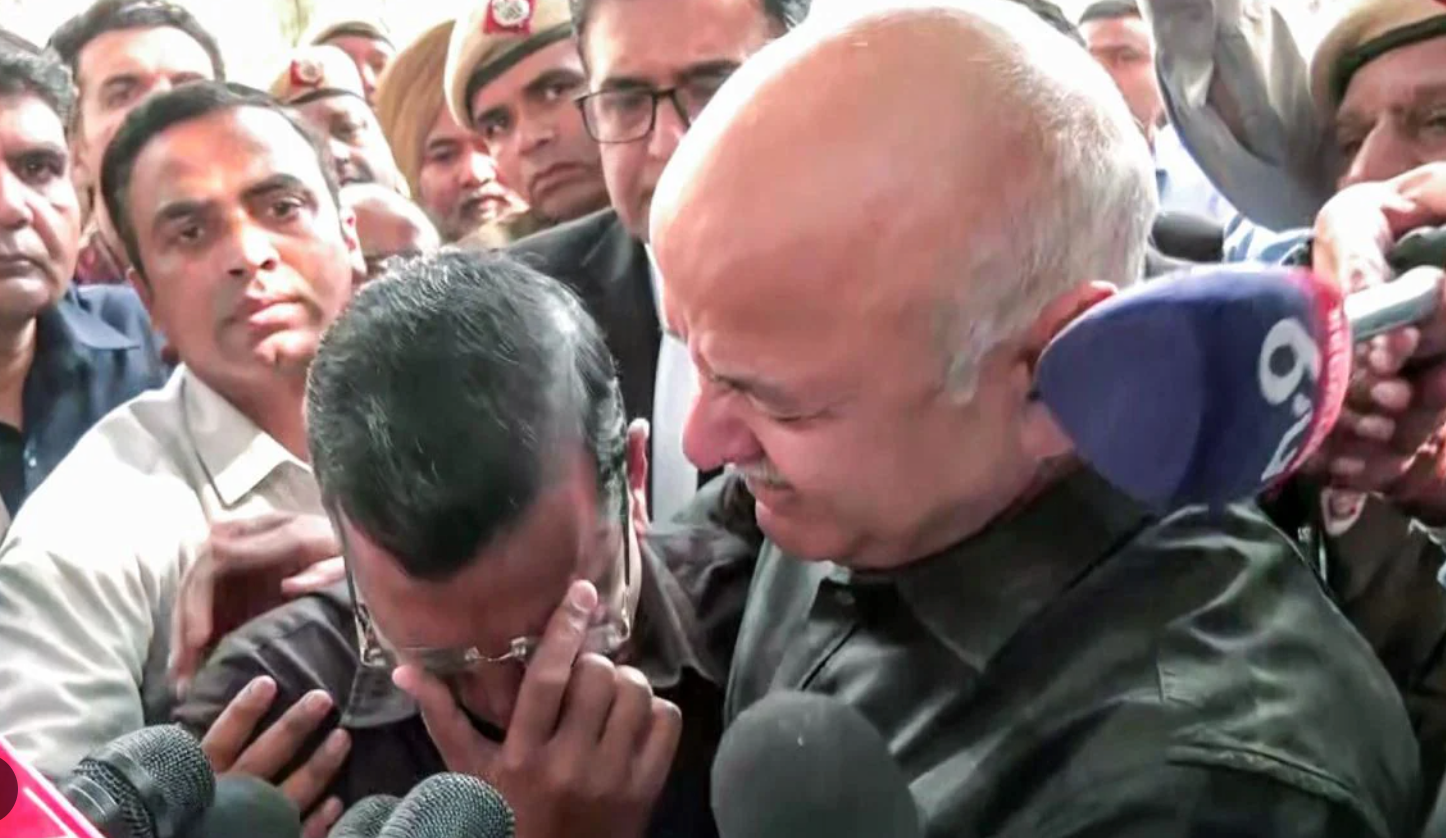
New Delhi: In a major development in the alleged Delhi Excise Policy case, a Delhi court on Friday discharged former Delhi Chief Minister and Aam Aadmi Party (AAP) national convener Arvind Kejriwal, senior AAP leader Manish Sisodia, and 21 other accused persons.
- Samsung Launches Galaxy S26 Series With Advanced Galaxy AI, Industry-Leading Camera and Built-In Privacy Display
- Excise Policy Case: Delhi Court Discharges Kejriwal, Sisodia and 21 Others; Raps CBI Over “Misleading” Chargesheet
- Delhi vs Himachal Police Clash | 24 Hour Standoff Over AI Summit Protest | Breaking News 2026
- The Kerala Story 2 Makers Refuse Court Screening, Kerala High Court Hearing Continues
- ₹590 Crore Fraud at IDFC First Bank: Forged Cheques Scam Raises Serious Questions
The order was passed by Special Judge Jitendra Singh of the Rouse Avenue Court, who strongly criticized the investigation conducted by the Central Bureau of Investigation (CBI). The court observed that the voluminous chargesheet, running into thousands of pages, contained “misleading averments” and lacked substantive evidence.
Court Finds No Prima Facie Case
The court held that the CBI failed to establish a prima facie case against the accused. Regarding Sisodia, who was alleged to have played a key role in the formulation and implementation of the 2021–22 excise policy, the judge noted that there was no material evidence or recovery linking him to the alleged irregularities.
On Kejriwal, the court observed that he had been implicated without any cogent material. The judge emphasized that attributing conspiracy without fundamental evidence or witness statements was unsustainable, particularly when the individual concerned held a constitutional position.
Chargesheet Termed Contradictory
The court further stated that the chargesheet suffered from internal contradictions that struck at the root of the alleged conspiracy theory. It noted that much of the material cited did not align with witness statements or evidence on record.
While discharging primary accused Kuldeep Singh, the judge remarked that it was surprising why he was made the first accused in the absence of any substantial material against him.
In a significant direction, the court also ordered a departmental inquiry against the CBI Investigating Officer over lapses in the probe.
Background of the Case
The Delhi Excise Policy was introduced in 2021 by the Delhi government with the stated aim of boosting revenue and reforming the liquor trade. However, following allegations of irregularities, the policy was withdrawn and a CBI probe was ordered by then Lieutenant Governor Vinay Kumar Saxena.
Investigating agencies, including the CBI and the Enforcement Directorate (ED), had alleged that the policy was designed to provide undue benefits to private entities at the expense of the public exchequer.
Sisodia was arrested by the CBI on February 26, 2023, and later by the ED on March 9, 2023. He remained in custody for approximately 530 days. Kejriwal was formally arrested by the CBI on June 26, 2024, while in ED custody, and spent around 156 days in jail before securing bail from the Supreme Court in September 2024.
Legal Representation
Senior Advocate Rebecca M. John and Advocate Vivek Jain represented Manish Sisodia, while Senior Advocate N. Hariharan and Advocate Mudit Jain appeared for Kejriwal.
With Friday’s ruling, all 23 accused persons in the case stand discharged, marking a significant judicial setback for the CBI in one of the most high-profile political corruption cases in recent years.