


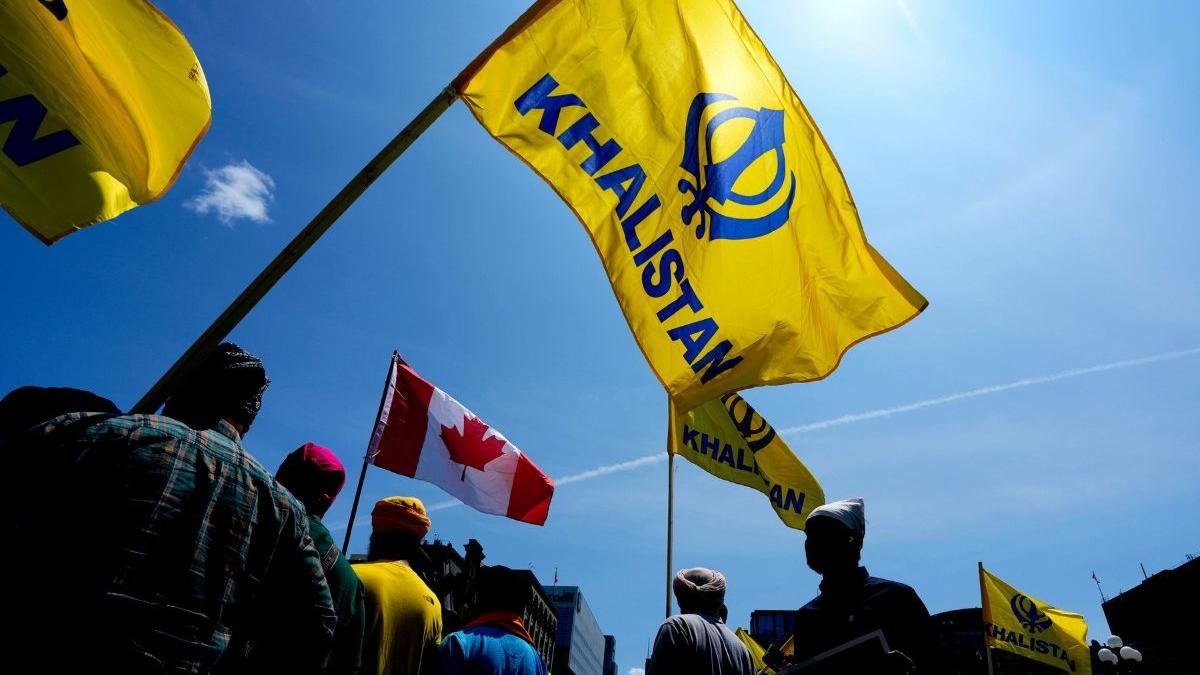
Canadian Government Report Admits Ongoing Financial Support for Khalistani Extremists from Within Canada
In a significant admission, a new Canadian government report has acknowledged that Khalistani extremist groups continue to receive financial support from Canadian soil, raising fresh concerns about terrorism financing and politically motivated violence.
The revelation comes through the “2025 Assessment of Money Laundering and Terrorist Financing Risks in Canada,” published by the Department of Finance, Canada. The report identifies Khalistani violent extremist organisations, including Babbar Khalsa International (BKI) and the International Sikh Youth Federation (ISYF), as among the groups benefiting from funds raised domestically in Canada through various means — including charities, diaspora networks, and criminal activities.

Key Findings of the Report:
- Terrorist Entities Listed in Canada:
The report states that several terror entities listed under the Canadian Criminal Code — such as Hamas, Hezbollah, and Khalistani extremist groups — continue to receive financial support from within Canada. - Funding Channels Identified:
These groups are leveraging charitable donations, misuse of non-profit organisations (NPOs), drug trafficking, vehicle theft, and even cryptocurrency transactions to generate funds. The report warns that Canada’s Money Services Businesses (MSBs) and even segments of its banking sector are being exploited to sustain extremist activity. - Politically Motivated Violence:
The report categorises these groups under Politically Motivated Violent Extremism (PMVE), noting that they are using violent means to pursue the creation of an independent Khalistani state in Punjab, India. - Canada Acknowledges Historic Role as Base:
While Canada has long been viewed as a base for Khalistani separatist movements — including organisations like Sikhs for Justice (SFJ) — this marks the first formal recognition by the Canadian government of their presence and active fundraising operations.
Fragmented Networks, Persistent Risk
Although the report suggests that previous large-scale fundraising networks have now broken into smaller, loosely affiliated groups, the threat remains. These individuals continue to show allegiance to the Khalistani cause and operate independently without direct association to any single group.
Concerns Over Misuse of Charitable Sector
A recurring concern in the report is the abuse of charitable and non-profit organisations as a tool for terror financing. It specifically states that this tactic — previously observed among Hamas and Hezbollah — is also being used by Khalistani groups to solicit donations from diaspora communities and move funds discreetly.
Despite generally low risk associated with Canadian NPOs, the report notes that a small subset of organisations remains vulnerable to terrorist financing abuse, urging a case-by-case risk assessment.
Limited Action Despite Longstanding Evidence
While videos, media reports, and witness testimonies have long documented the presence and activities of Khalistani elements in Canada, concrete action by the authorities has been limited. This new report, however, could mark a shift in tone and policy as Ottawa faces growing international scrutiny over extremism emanating from its territory.
- Nepal Flood Disaster: Death Toll Rises to 353 as Newly Formed Lake Threatens to Burst
- Kriti Sanon Raksha Bandhan Ad Controversy: GIVA Withdraws Advertisement After Social Media Backlash
- Maharashtra Marathi Language Drive: 1.5 Lakh Drivers Learn Marathi, 7,750 Fail Test and Must Reappear | Auto, Taxi and App-Based Cab Drivers Asked to Learn Marathi in Maharashtra
- No Lockdown in India Amid LPG Concerns: Hardeep Singh Puri Dismisses Rumours, Assures Energy Security
- Courts Rein in Arbitrary Bank Account Freezes: Major Relief for Citizens and Businesses