


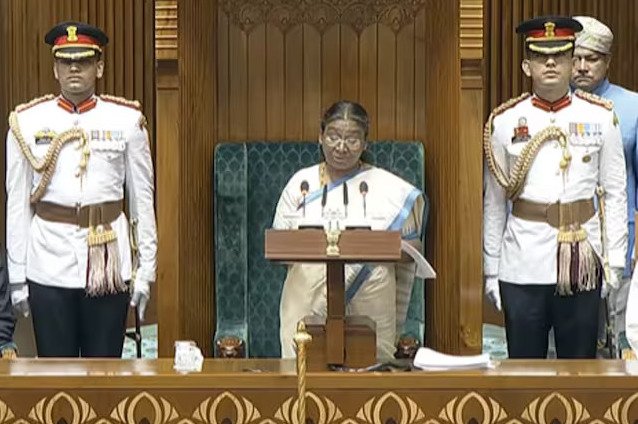
The governor is supposed to be an apolitical head of state who follows the state Council of Ministers’ recommendations. What is the connection between the state government and the governor?
On Saturday, July 28, President Droupadi Murmu named governors for the states of Rajasthan, Telangana, Maharashtra, Punjab, Sikkim, Meghalaya, Assam, Jharkhand, and Chhattisgarh. Lakshman Prasad Acharya, the governor of Assam, has also been handed responsibility for Manipur.
President Droupadi Murmu appointed Governors for Rajasthan, Telangana, Maharashtra, Punjab, Sikkim, Meghalaya, Assam, Jharkhand and Chhattisgarh on Saturday (July 28). Assam Governor Lakshman Prasad Acharya has been given the additional charge for Manipur as well.
State Governors are chosen by the President of India and serve as the Center’s delegates. This is what the post says, based on the Indian Constitution, and the reasons why there are moments when tensions arise between state administration and governors.
How is a state’s governor chosen?
The Indian Constitution states in Article 153 that “There shall be a Governor for each State.” The 1956 Constitutional Amendment stated that “nothing in this article shall prevent the appointment of the same person as Governor for two or more States,” a few years after the document’s adoption.
What are the requirements to become a governor of a state?
The Governor’s qualifications and terms of service are outlined in Articles 157 and 158. In addition to being an Indian citizen, the governor must be at least 35 years old. The governor cannot occupy any other position of profit, nor can he serve in the state legislature or as a member of Parliament.
What is the connection between the state government and the governor?
The governor is supposed to be an apolitical head of state who follows the state Council of Ministers’ recommendations. The Chief Minister will lead a Council of Ministers tasked with assisting the Governor in carrying out his duties, “save to the extent that he is by or under this Constitution required to exercise his functions or any of them in his discretion,” according to Article 163.
The Governor is vested with significant powers under the Constitution, including the ability to approve or disapprove legislation passed by the state legislature, decide how long it takes a party to gain a majority in the state Assembly, and decide which party should be called to prove its majority in the event of a tie in an election.