


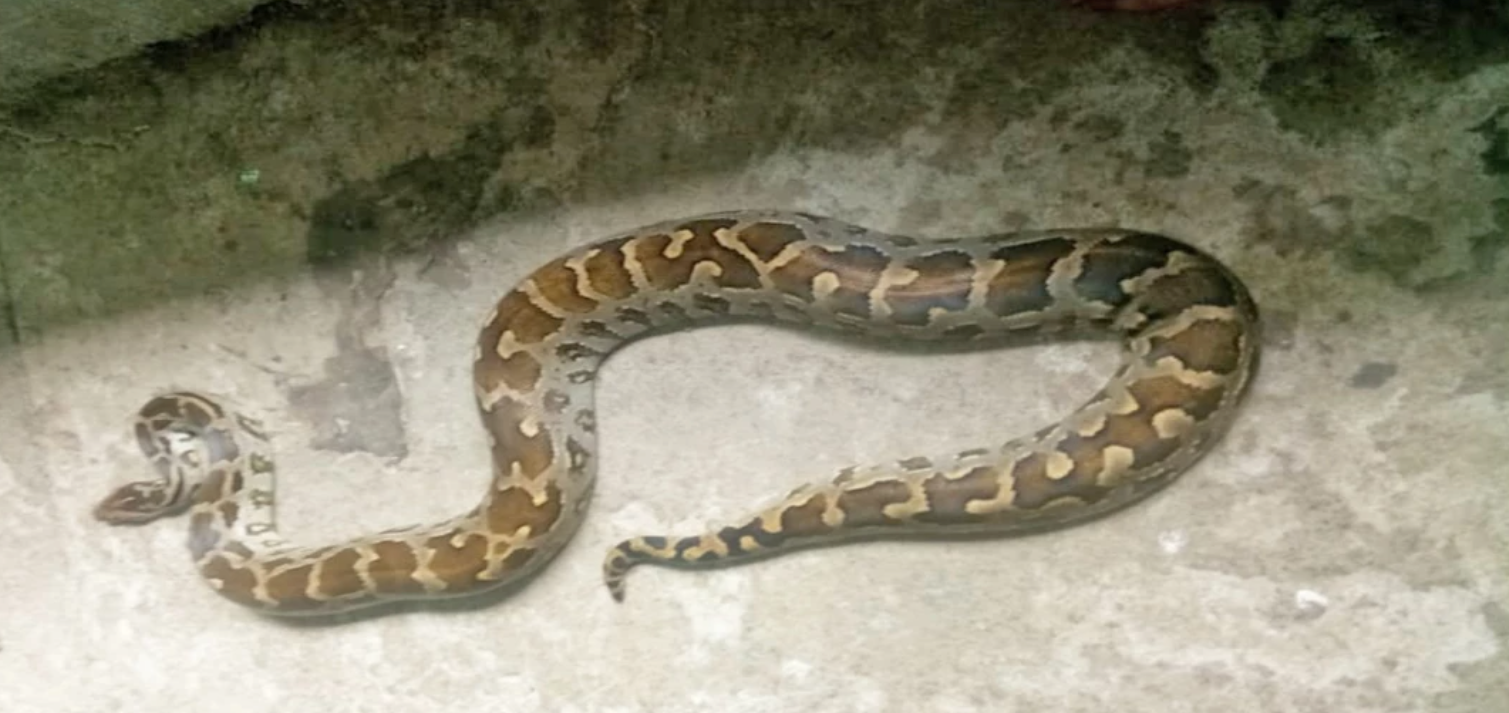
41 Pythons Rescued in a Month from BKC, Highlighting Rising Human-Wildlife Conflict
MUMBAI – The Bandra-Kurla Complex (BKC), one of Mumbai’s premier business hubs, is facing an unusual surge in human-wildlife conflicts. In June alone, 41 pythons were rescued from the area, hinting at a growing crisis. Wildlife experts, both independent and associated with NGOs like Wildlife Animal Protect and Rescue Association (WARA), along with forest officials, have reported receiving numerous distress calls throughout the month.
“Some calls come from corporate offices, others from pedestrians, gardeners, and construction workers,” said Atul Kamble, an independent snake rescuer. The first rescue in June was recorded on the 4th. One python was recently found inside a corporate office — it had fallen from an air-conditioning duct during a meeting.
The situation has become so frequent that rescuers’ contact numbers are now displayed on pillars near the Eastern Express Highway connector leading to BKC for quick access.
The largest operation occurred on June 25, when Kaushik Keni from WARA received a call from a construction worker at 11 PM near the Mithi River. “We first found a baby python injured by a car. Two more were found near a police van, and eventually, we discovered seven more in the area,” said Keni. It appeared they had recently hatched in a sewer and were seeking warmth from the asphalt.
All 10 pythons were medically treated and rehabilitated into the wild by NGO veterinarians.
Experts believe ongoing metro construction (Line 2B) and urbanization have destroyed large parts of the pythons’ mangrove habitat. In the past, snakes were released near what is now Maharashtra Nature Park, behind Dharavi and alongside the Mithi River, a known mangrove habitat.
“Pythons naturally wander to expand their colonies but end up in urban spaces like BKC,” said Kamble. A forest officer added, “The vibrations and noise from the metro work are driving them out of their burrows.”
Apart from pythons, snakes such as cobras, Russell’s vipers, and buff-striped keelbacks were also rescued in June.
Officials urge the public not to handle snakes themselves and to contact trained rescuers instead. “Once declared medically fit, the snakes are relocated to remote natural habitats to prevent further encounters with humans,” the forest officer added.